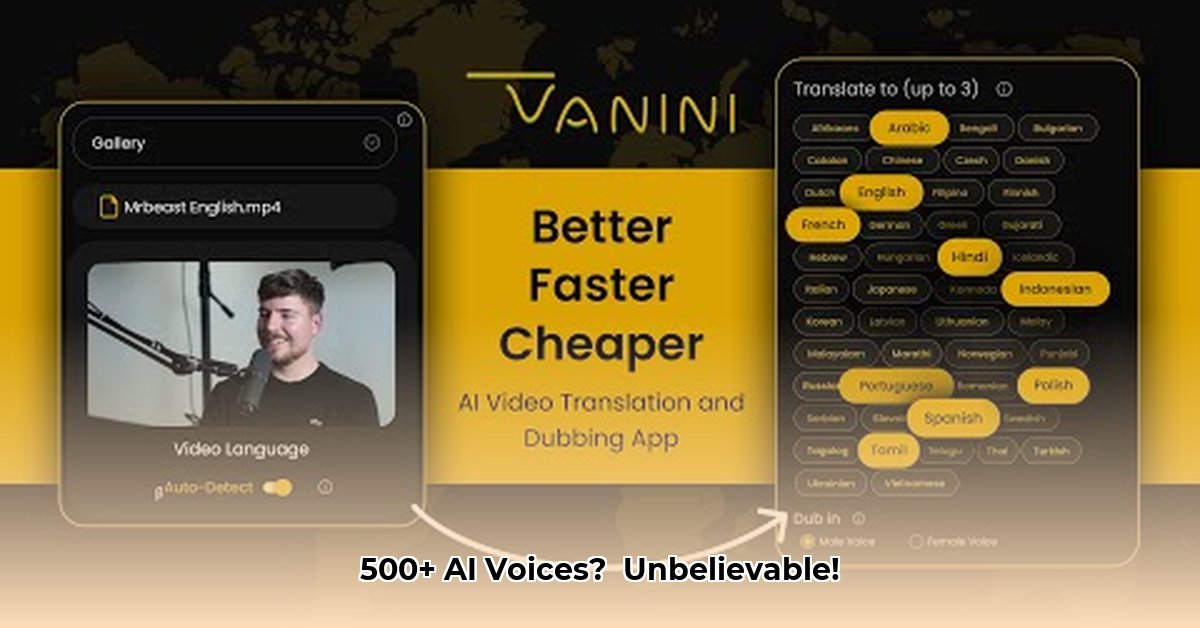
Want to add professional-sounding voiceovers to your videos and podcasts without breaking the bank or your computer? This in-depth guide explores Dubbing AI APK, a software application offering 500+ voices and remarkably low CPU usage. We'll examine its functionality, compare it to competitors, and discuss the future implications of this groundbreaking technology. Whether you're a gamer, YouTuber, or simply a tech enthusiast, this article provides a comprehensive overview of Dubbing AI.
Unleashing the Power of 500+ AI Voices
Dubbing AI APK is transforming voice modification. Imagine having access to a vast library of over 500 distinct voices—from deep, resonant tones to light, whimsical ones—all readily available. Need a gruff pirate voice for your gaming livestream? Done. A sophisticated announcer for your YouTube channel? Easily achieved. The app boasts a wide range of accents, character voices, and even convincing celebrity impersonations.
But the true game-changer is its efficiency. Unlike many resource-intensive voice changers, Dubbing AI APK uses only a minimal percentage (approximately 2-3%) of your CPU. This ensures smooth performance even during demanding tasks like gaming or live streaming. This is a huge advantage for streamers and gamers who need reliable, lag-free audio.
This cross-platform compatibility extends to Windows, macOS, Android, iOS, VR, and AR environments. Furthermore, its seamless integration with popular communication platforms like Discord, Skype, and TeamSpeak adds to its versatility. Need to inject some fun into your online chats? Dubbing AI delivers.
What's the secret behind this impressive performance? Dubbing AI leverages cutting-edge "transformer-based architecture" (a sophisticated deep learning technique employing neural networks) to generate highly realistic voice transformations in real-time. This marks a significant leap from older voice alteration technologies. The application can even convincingly convey nuanced emotions, ranging from hushed whispers to enthusiastic shouts.
Addressing the Challenges and Ethical Considerations
While Dubbing AI’s current capabilities are impressive, several considerations remain. Long-term algorithm stability requires ongoing monitoring and improvement, necessitating regular software updates. Furthermore, the potential for misuse—creating realistic voice clones for malicious purposes (similar to deepfakes)—presents a significant ethical concern. This raises the possibility of phishing scams and other fraudulent activities. Responsible use and a strong awareness of potential downsides are paramount.
What does the future hold for Dubbing AI? We can anticipate continued improvements: expanded voice libraries, enhanced voice replication accuracy, and potentially tools for creating personalized voice clones. However, these enhancements must be accompanied by robust security measures to prevent misuse. Developers need to invest heavily in effective detection and reporting systems. Ultimately, the success of Dubbing AI hinges on a collaborative approach—developers continuously refining the technology, and users employing it responsibly.
How will this impact various groups?
- Developers: Prioritize community building, address misuse proactively, and establish sustainable funding models.
- Gamers & Streamers: Use responsibly, provide feedback, and advocate for fair use practices.
- Content Creators: Enhance productions while respecting copyright and ethical guidelines.
- Cybersecurity Researchers: Monitor potential misuse and develop countermeasures.
The legal landscape surrounding this technology is equally critical. The realistic voice cloning capabilities raise significant questions about copyright infringement, identity theft, and defamation. Collaboration among developers, legal experts, and regulatory bodies is crucial to ensure responsible development and usage.
Mitigating the Risks of Dubbing AI Voice Cloning Misuse
The rapid advancement of AI voice cloning presents both incredible opportunities and substantial risks. Existing legal frameworks and technological safeguards are currently insufficient to prevent malicious applications. A comprehensive, multi-pronged approach—combining improved technology, stronger legislation, and ethical corporate practices—is necessary. Striking a balance between harnessing the benefits of this technology and mitigating potential harms is paramount.
Understanding and Addressing the Risks
The ease of access to hundreds of high-quality AI voices provided by Dubbing AI and similar applications presents significant ethical concerns. A perfectly replicated voice can be used for phishing scams, identity theft, or blackmail. The potential for widespread harm is substantial.
Technological Safeguards: Preventing Misuse
Effective prevention requires a multi-layered approach. Advanced voice authentication technology, akin to a highly secure voice password, is a key element. This makes it significantly more challenging for malicious actors to leverage cloned voices for fraudulent purposes.
Simultaneously, sophisticated detection systems are needed to identify subtle anomalies that distinguish cloned voices. This constitutes a technological challenge, requiring continuous adaptation to stay ahead of evolving cloning methods.
Developers bear the responsibility of incorporating robust safeguards: secure data handling, transparent privacy policies, and limitations on software usage.
Regulatory and Legal Action
Legislation must adapt to the rapid pace of technological innovation. Clear legal frameworks defining liability and shielding individuals from abuse are necessary. This demands close collaboration between governments, technology companies, and international organizations. Intellectual property rights, particularly regarding the use of voice actors' unique vocal characteristics, require careful legal consideration.
Individual Precautions: Protecting Yourself
Individual vigilance also plays a crucial role. Maintaining skepticism towards unsolicited calls or messages is vital. Report suspicious activity to the appropriate authorities. Furthermore, learning to detect potential deepfakes, by identifying inconsistencies in audio or video quality, enhances individual protection.
The Path Forward: Balancing Innovation with Responsibility
The future of Dubbing AI depends on balancing innovation and responsibility. Harnessing the technology's potential benefits— from accessibility features to creative applications—while mitigating associated risks requires continuous improvement of safeguards, proactive regulatory oversight, and a firm commitment from all stakeholders to ethical use. Open discussion surrounding the prevention of misuse is crucial for shaping its future.
⭐⭐⭐⭐☆ (4.8)
Download via Link 1
Download via Link 2
Last updated: Friday, May 09, 2025